On a wet Tuesday in Wroclaw, Marcus Silva, a customer success lead, was trying to settle a dispute about a product claim that had vanished from a 2019 article. The publisher’s page now returned a paywall. The Internet Archive’s copy, once a handy backup, had gone partial too. Three clicks later, he had a date, a headline, and not much else.
That tiny annoyance is becoming a policy fight. News organisations are limiting the Internet Archive’s access to their journalism, and the move is not just about bots scraping pages. It is about copyright, business models, citations, and the strange fact that a web page can be both public history and private property at the same time.
Why it matters now
The pressure has been building for years, but several recent shifts made it sharper. Publishers have spent more on paywalls, licence deals, and first-party audiences, while AI systems have created fresh demand for large archives of text. A crawl that once looked like harmless preservation now looks, to some newsrooms, like a feedstock problem.
The legal climate matters too. Courts and regulators are paying closer attention to how content is copied, stored, summarised, and reused. At the same time, readers have become used to pulling a clean archived page whenever a source disappears. That expectation is colliding with a more defensive publishing stance. The result: a less open memory layer for the web, just as people are asking for more proof, more context, and more receipts.
What is really at stake here
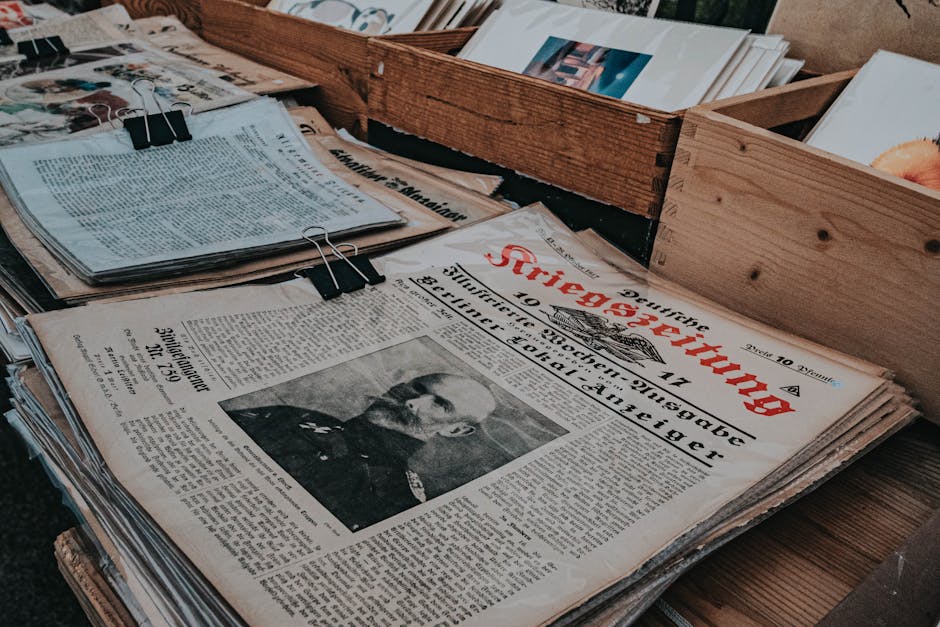
No kidding, The Internet Archive is not just a nostalgia machine. For researchers, lawyers, journalists, and ordinary readers, it acts like a public memory buffer when source pages change, vanish, or get quietly edited. If you have ever checked whether a quote was later removed, the Archive probably did work for you.
Publishers pushing back are not all doing the same thing. Some are blocking automated crawling. Some are using technical controls that still allow human visits. Others want stronger limits around images, paywalled text, or replay features that mimic the original page too closely. That means the debate is less “archive good, publisher bad” than a messy argument over boundaries.
The key point is simple: access is not the same as ownership. A site can be public on the open web and still be a licensed asset built on payroll, reporting, and legal risk. The trouble starts when the same article is treated as both a shared civic record and a commercial product that should not be endlessly copied.
A fair way to think about the issue is to separate the layers:
- Discovery: can readers find that the article ever existed?
- Preservation: can a durable copy survive if the page changes or disappears?
- Quotation: can small excerpts be used with attribution?
- Bulk reuse: can large-scale copying feed search, analytics, or model training?
- Revenue protection: can publishers stop substitutes from competing with the original?
Those layers are getting mashed together in public debate. A newsroom may say it is protecting journalism, while a reader hears that old reporting is being locked away. Both can be true. That is why the conversation has such a brittle edge.
If the web forgets cheaply, truth gets expensive.
There is also a reputational issue for publishers. When organisations tighten access, they sometimes look as if they are trying to erase their own history. That is usually not the intention. More often, they are trying to stop a third party from republishing what they paid to create. But intent does not always survive contact with a public that wants a stable archive.
What this looks like in practice

In Krakow, Ibrahim Kowalski, an engineering manager, needed to audit a vendor’s old security claims before renewing a contract. He found 14 references on current pages, but only 3 archived full-text copies. The rest were partial captures or blocked after the publisher changed its rules. It added two full days to the review.
Real talk, In Doha, Camila Popescu, an HR business partner, was preparing a misconduct response and needed to verify how a workplace policy had been described in a trade publication two years earlier. The Internet Archive had the headline and metadata, but not the full article body. Sound familiar? Her team ended up paying for a licensed database access they had not budgeted for.
In London, Ravi Menon, a freelance researcher, tracked a policy shift across 27 news articles over 18 months. He used archived pages to compare wording before and after editor updates. When three outlets narrowed access, he lost the clean text trail for 11 of the pieces and had to rely on screenshots, notes, and secondary citations.
These are not edge cases. They are the boring, practical uses that make archives matter. Most people do not care about preservation as an abstract principle. They care when a source disappears and they need to prove what it said.
Common mistakes to avoid

-
Treating archive access as a moral binary. The debate is often framed as “preservation versus piracy”, which is too neat to be useful. Newsrooms are defending legitimate commercial interests, but they are also weakening a public reference layer that many readers rely on. Once you make the issue ideological, you stop seeing the trade-offs.
-
Assuming all crawlers are the same. A preservation crawl, a search-engine crawl, and a model-training scrape are not identical activities. They can look similar from the server logs, which is why publishers get twitchy, but the downstream uses are different. Good policy starts by distinguishing them.
-
Confusing a snapshot with a canonical record. An archived page is a version, not a certificate of truth. Pages can be incomplete, broken, or captured at odd times. If you cite an archive, you still need the original publication details and, when possible, corroboration from other sources.
-
Ignoring the publisher’s business model. Some readers talk as if news somehow appears by magic. It doesn’t. Reporting teams, editors, photographers, legal review, and distribution all cost money, and many outlets are in a fragile position. If archives become a free substitute for paid access, the economics get uglier fast.
-
Building workflows that depend on one archive alone. The Internet Archive is invaluable, but it is not the only preservation route. Relying on one service makes research brittle if that service changes rules, gets blocked, or loses material for technical reasons. Redundancy matters more than nostalgia.
-
Assuming technical blocking solves the problem cleanly. Blocking often reduces access for everyone, not just commercial reusers. It can frustrate journalists, academics, and readers who are trying to check facts in good faith. A blunt fix usually creates a wider mess than the original complaint.
A practical checklist
-
Map what you actually need. Are you trying to preserve full text, verify edits, or quote short passages? Each use case needs a different method, and mixing them leads to bad decisions.
-
Keep local copies of critical evidence. If a page matters to a contract, investigation, or dispute, save a timestamped PDF or screenshot the same day. Don’t assume any archive will still have it next quarter.
-
Use multiple sources for verification. Pair the Internet Archive with the publisher page, search engine caches, licensed databases, and your own records. One source is convenient; three sources are defensible.
-
Cite the version, not just the headline. Include publication date, archive timestamp, and access date. This makes it much easier to prove which wording you saw and when you saw it.
-
Check publisher terms before bulk use. If you work in research, compliance, or product intelligence, read the site’s robots and terms policies before building a workflow on archived copies. A quiet technical block can ruin a useful habit.
-
Escalate to paid access where needed. If an archive is partial and the article is important, paying for a licence or database may be the least painful option. It is not elegant, but it can save days.
-
Preserve your own citations list. Keep a shared spreadsheet or note with URLs, archive links, captured timestamps, and brief context. That little ritual saves a lot of grief later.
When NOT to do this
There is a contrarian case here: do not rely on the Internet Archive as a default crutch for every reading habit. If your work routinely needs current reporting, live URLs and licensed feeds are often better. Make sense? They are more stable for attribution, less fuzzy on rights, and less likely to surprise you with a broken replay.
It is also a mistake to treat every blocked archive as a censorship story. You with me? Sometimes a newsroom is making a plain-vanilla business decision, and it deserves to do that. If your organisation depends on access to journalistic backfiles, the serious response is not outrage. It is budgeting, documentation, and a better preservation policy. Are you actually protecting knowledge, or just assuming someone else will store it for free?
Where to learn more
- Internet Archive overview: https://en.wikipedia.org/wiki/Internet_Archive
- Official Internet Archive site and archives: https://archive.org
- Robots exclusion standard and crawling basics: https://developer.mozilla.org/en-US/docs/Web/HTTP/Guides/Robots_txt
- W3C Web Archiving interest group: https://www.w3.org/community/webarchiving/
The real argument is not whether journalism should exist in archives. It is who gets to set the terms, who pays for the memory, and how much of the public record should remain accessible after the original page changes. That is a harder question than “should they block it?”, and a more useful one too.