What a mathematician is to do
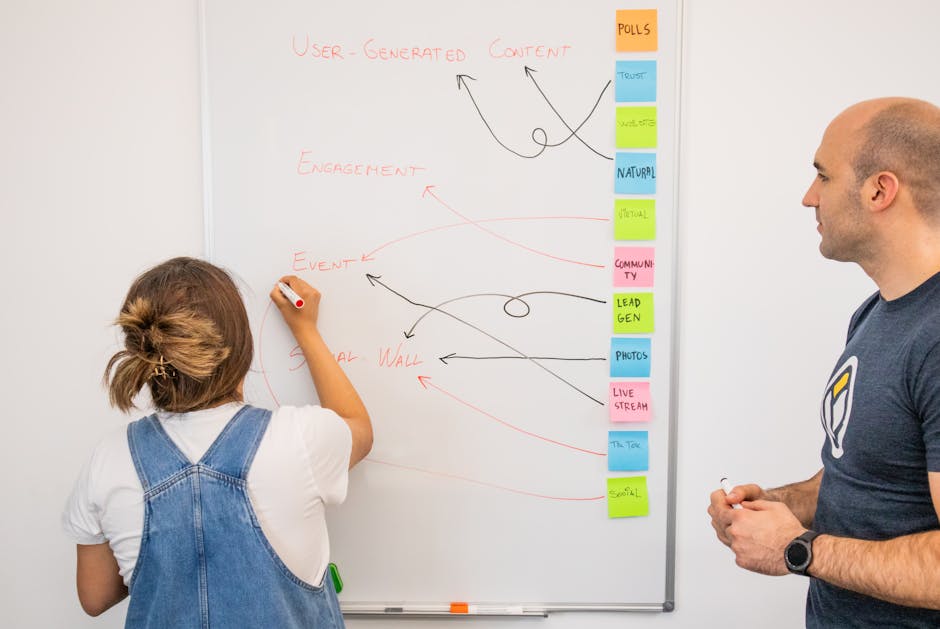
Real talk, At 8:12 on a damp Tuesday in Bristol, Dr. Amina Shah was staring at a whiteboard full of symbols that no longer looked like research and not yet like work. Her postdoc was ending in 43 days. The seminar talks had stopped mattering. What mattered was rent, visa timing, and whether her proof-writing habits meant anything outside a university corridor.
She is not unusual. Plenty of mathematicians spend years training to solve hard problems, then discover that the job market does not hand them a neat extension cord into academia. Make sense? A degree that seems abstract from the outside often turns out to be unusually practical, but only if you know where to aim it.
Why it matters now

The old route was simple: PhD, postdoc, lectureship, tenure-track if the stars cooperated. That path has been thinning for a long time. Hiring in many departments remains tight, fixed-term roles are common, and the number of PhDs has not been shrinking to match. Meanwhile. employers in tech, finance, health, logistics, and security keep paying for people who can model uncertainty and spot structure fast.
The timing matters for another reason too. Sound familiar? Machine learning, privacy regulation, fraud detection, climate modelling, and computational biology all run on mathematical thinking, even when the job title says something else. A mathematician who can explain a model, defend its assumptions, and test it against messy data has become far more valuable than the stereotype suggests.
The core idea: stop treating mathematics as a single career lane

A mathematician is not only someone who proves theorems. That is the narrowest possible reading. In practice, mathematicians are trained to compress complexity, search for patterns, and reason carefully under uncertainty. Those are transferable skills, and they map surprisingly well to modern employers who are drowning in noisy data and half-truths.
Side note: the trick is to translate, not dilute. Employers rarely hire “a mathematician” as such. They hire someone who can build a forecasting model, audit risk, write secure code, analyse experiments, or make a pricing system less stupid. Same brain, different packaging.
A useful way to think about the field is to split it into several working identities:
- Research mathematician: still aiming at original proof, usually in academia or a research lab.
- Applied mathematician: working on optimisation, simulation, fluid dynamics, operations research, or modelling.
- Data scientist / machine learning specialist: using statistics, linear algebra, and numerical methods to build predictive systems.
- Quantitative analyst: pricing, hedging, and risk in finance, where speed and precision matter.
- Cryptography / security specialist: working on secure protocols, encryption, and adversarial systems.
- Operations or decision scientist: improving schedules, supply chains, staffing, and resource allocation.
That list is not exhaustive, and that is the point. The market for mathematical thinking keeps expanding because businesses have discovered a blunt truth: intuition is not a strategy when the spreadsheet is lying.
What separates the people who do well from the people who feel stranded is often not talent. It is narrative. A theorem proof and a hiring manager’s shortlist are different genres. You have to tell a story about impact. If you built a numerical method, what did it save? If you studied topology, how does that sharpen your way of thinking about complex systems? If you spent six years on abstract algebra, how did you learn to identify invariants, manage ambiguity, and not panic when the first answer was wrong?
“The proof may be abstract, but the work must be legible.”
That sentence is boring on purpose. It is also the bridge.
The practical question is not whether mathematics is useful. It clearly is. The real question is: useful to whom, and in what form? Once you answer that, a lot of doors stop looking like dead ends.
What this looks like in practice

Mina Patel, 29, risk analyst, London, UK
Mina finished a masters in mathematics and assumed she would need a PhD to be taken seriously. Instead, she joined a retail bank’s model validation team. In 18 months, she reviewed 27 credit models, flagged 9 weak assumptions, and cut review time by 34% by rewriting parts of the checking workflow in Python.
Jonas Keller, 34, optimisation engineer, Munich, Germany
Jonas came out of pure maths with a love for proof and a dislike of academic politics. He moved into logistics. His team used route optimisation to reduce empty truck miles by 11.8% across 2,430 daily shipments. He still uses the same habit from graduate school: if the result looks elegant, test it twice.
Priya Nair, 31, machine learning engineer, Bengaluru, India
Priya’s doctorate was in differential equations, but her first serious industry project was anomaly detection for manufacturing sensors. She built a model that identified 413 early warning events in six months, many of them before the production line failed. The maths was not the headline. The avoided downtime was.
These stories differ in detail, but not in structure. Each person kept the core mathematical skill set and found a problem that paid for it.
Common mistakes to avoid

-
Thinking the degree speaks for itself. It does not. A hiring manager may admire the subject, but they still need to see what you can build, fix, test, or explain. If your CV reads like a transcript with better margins, you are making the recruiter do all the translation work.
-
Confusing abstraction with vagueness. Abstract work is precise. Vague communication is something else entirely. If you cannot describe the inputs, assumptions, and output of a project in plain language, people will assume you cannot operate outside your own notes.
-
Ignoring programming until the last minute. A mathematician who can code has a much wider range of options. Even in roles that are not software jobs, fluency in Python, R, Julia, or MATLAB often decides whether you are useful on day one or merely impressive in theory.
-
Treating academia and industry as moral opposites. They are different, not superior or inferior. Some mathematicians genuinely belong in research. Others will do better in a company where they can solve a production problem this quarter instead of waiting three years for a paper to be accepted.
-
Underplaying communication. Many mathematically strong candidates lose out because they write as if every reader has already passed qualifying exams. The ability to explain a model to a product manager, a doctor, or a policymaker is part of the job, not a soft extra.
-
Waiting for the perfect niche. People sometimes stall because they want the exact dream role, with the exact title, using the exact subfield they studied. Careers rarely arrive that neatly. A good first role can be a platform, not a verdict.
A practical checklist

- Write a translation CV. For each project, add one sentence on the business, scientific, or operational result. Not the method only, the effect.
- Build one public portfolio piece. A GitHub repo, a technical blog post, or a short case study can show how you think under constraints.
- Learn one production-grade tool. Pick Python, SQL, or R and get comfortable enough to ship a small analysis without hand-holding.
- Map five employer types. Try finance, tech, defence, health, and operations. Different sectors value different parts of your training.
- Practice explaining one model to a non-specialist. Do it aloud in 90 seconds. If the explanation collapses, simplify it again.
- Find one problem you can measure. Employers like evidence. “Improved accuracy by 8.4%” travels better than “worked on optimisation.”
- Use your network before you need it. Alumni, former supervisors, conference contacts, and online communities can surface roles that never make it to general job boards.
When NOT to do this
Not every mathematician should rush into industry. That sounds obvious, but people still feel social pressure to monetise a subject they love. If your energy comes from theorem proving. teaching, or the long patience of foundational work, then a fast-moving commercial role may flatten the part of you that actually does the best thinking.
There is also a real cost to bad fit. A role built around slide decks, stakeholder management, and constant reprioritisation can be miserable for someone who wants deep focus. In that case, the answer may not be “leave mathematics.” It may be “change the shape of your mathematical life,” perhaps by teaching, consulting, or joining a research-heavy organisation where the pace fits better. Must every mathematically trained mind be turned into a product feature?
Where to learn more
- https://en.wikipedia.org/wiki/Mathematics - a broad overview of the field and its branches.
- https://www.ams.org/ - the American Mathematical Society, with career and community resources.
- https://en.wikipedia.org/wiki/Operations_research - a practical branch with obvious links to industry, logistics, and optimisation.
The strongest mathematicians are rarely the ones who cling to a single identity. They are the ones who notice that a proof technique, a modelling habit, or a way of testing assumptions can solve someone else’s painful problem on Tuesday afternoon. If that sounds less romantic than pure theory, fair enough. It is also how a lot of interesting careers begin, isn’t it?