Maya Bennett was six minutes into a budget review when the word she’d heard all quarter finally landed with force: automation. Not as a vague executive slogan, but as a line item. Her employer, a mid-sized logistics firm in Manchester, had approved software that would cut manual reporting work by 31% within two quarters. Maya, a 38-year-old operations coordinator, wasn’t being laid off. Worse, in some ways. Her role was being “evolved”.

Btw, She went home that evening and did what many smart professionals do when they feel the floor shift: she typed a panicked search into her phone. Not “how to code”. Not “MBA options”. Just this: “what should I learn if my job is changing but I’m not in tech?” That question is becoming common in offices, hospitals, councils, retailers, banks, schools, and warehouses. People who built solid careers outside software now feel a quiet pressure to become more digital, more analytical, more adaptable - without throwing away fifteen years of hard-won experience.

Real talk, the mistake is thinking reskilling means becoming someone else. Usually, it doesn’t. Career growth for non-tech professionals is less about a dramatic reinvention and more about moving one lane over while traffic is still flowing. You keep your industry knowledge, your judgement, your network, your credibility. You add skills that make those assets more valuable. That’s a different game entirely.

Why it matters now

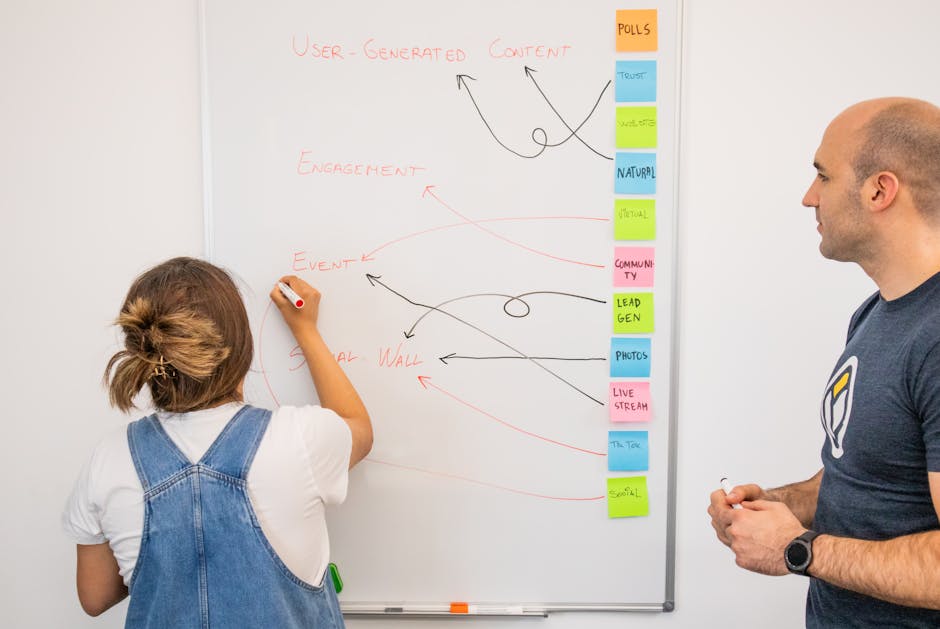
Close-up of office workers engaged in a tech project at a modern workplace.
Fot. cottonbro studio / Pexels

The pressure isn’t imaginary. Employers have spent the past two years buying AI tools, workflow software, analytics platforms, and compliance systems that change everyday work for people far beyond engineering teams. Customer service staff now work with AI assistants. HR teams screen data in new systems. Finance analysts rely on automation for reconciliations. Project managers are expected to understand digital delivery, not just meetings and milestones.

Honestly, there’s also a hiring shift hiding in plain sight. Many job descriptions now ask for “data literacy”, “AI familiarity”, “digital transformation experience”, or “cross-functional collaboration with product and tech teams” even when the role itself isn’t technical. Regulation matters too: privacy rules, cybersecurity expectations, and sector-specific compliance have made basic digital fluency part of professional competence. If your work touches customer data, digital tools, or process design, reskilling is no longer optional polishing. It’s job security.

The core idea

Smiling young professional in black suit working on laptop at a cozy office desk surrounded by plants.
Fot. AI25.Studio AI GENERATIVE / Pexels

For non-tech professionals, the smartest reskilling strategy is adjacency. That means learning skills one step next to your existing role, not ten steps away. An experienced recruiter doesn’t need to become a machine learning engineer. But they may need to understand applicant tracking systems, AI-assisted sourcing, hiring analytics, prompt writing, and data privacy basics. A sales manager may not need SQL on day one, but they probably do need CRM reporting, pipeline analysis, and comfort with automation.

This matters because employers rarely pay premium rates for beginners, even enthusiastic ones. If you spend twelve months trying to outrun specialists in a field they entered years ago, you may end up less competitive than before. But if you combine your existing domain expertise with selected digital skills, you become unusually useful. Worth thinking about, no? That’s where promotions, sideways moves, and better offers tend to happen.

Think of reskilling as building a “career bridge” with three materials:

Notice what’s not on that list: mastering everything. Honestly, that fantasy wastes more careers than a lack of talent ever does. Employers aren’t usually searching for perfect hybrids. They’re looking for people who can operate effectively at the messy boundary between business needs and digital change.

A useful rule: reskill toward problems, not trends. “AI” is not a career plan. “I can cut reporting time by 11 hours a month using spreadsheet automation and clearer dashboards” is. “Cybersecurity” is too broad. “I can run vendor assessments for our procurement team with better security awareness” is much stronger. The narrower and more workplace-linked your learning is, the easier it becomes to prove value fast. You with me?

Don’t try to become impressive in abstract. Become useful in context.

There’s also a sequencing issue. Many people start with expensive certificates because they feel serious. But serious isn’t the same as effective. The better order is often: identify role risk, choose one adjacent skill, practice it on real work, document results, then decide whether formal study is worth the cost. That sequence keeps you grounded. It also stops you from collecting credentials that look good on LinkedIn and do very little in your actual week.

What good reskilling usually includes

The best reskilling plans for non-tech professionals tend to have four features:

If that sounds modest, good. Modest plans get finished.

What this looks like in practice

Professional woman in glasses working at a desk with a laptop in an organized modern office.
Fot. Andrea Piacquadio / Pexels

Priya Shah, a 41-year-old HR business partner in Birmingham, UK, saw hiring volumes dip while requests for “talent analytics” rose. She didn’t enroll in a broad tech diploma. Instead, she spent nine weeks learning spreadsheet analysis, dashboard basics, and AI-assisted job description drafting. Then she rebuilt her firm’s monthly hiring report, cutting preparation time from 5.5 hours to 97 minutes. Four months later, she moved into a people analytics lead role with a 14% salary increase.

Carlos Mendez, a retail area manager in Austin, Texas, had managed 12 stores for years and knew margins cold. What he lacked was digital language. He took a short course in e-commerce metrics and A/B testing, then partnered with the company’s online team to test product page changes for three regional campaigns. One test lifted conversion by 6.8%. He wasn’t suddenly “in tech”. He became the commercial operator who could connect shop-floor reality to digital sales - and that got him promoted to omnichannel performance manager.

Aneta Kowalska, a 36-year-old procurement specialist in Kraków, Poland, noticed suppliers were being asked tougher data security questions. She studied basic cyber risk concepts, vendor due diligence, and compliance workflows over ten weeks, mostly in the evenings. She then redesigned her supplier onboarding checklist and added a 14-question security review. Within a quarter, her team flagged three high-risk vendors before contract signing. Her title stayed the same at first. Her influence didn’t. By month seven, she was leading procurement risk for a team of 18.

These stories work for the same reason: none of them tried to become entry-level technologists. They used selective learning to become more valuable inside the jobs they already understood.

Common mistakes to avoid

Focused professional woman using a laptop in a modern office setting.
Fot. Vitaly Gariev / Pexels

A practical checklist

An empty conference room with chairs, a projector screen, and presentation setup.
Fot. Pavel Danilyuk / Pexels
  1. Write down the three tasks in your current role most likely to change within 12 months. Be specific: reporting, scheduling, supplier checks, customer queries, budget tracking. This gives your learning a target.

  2. Scan 20 job listings in your field and tally repeated skill requests. Count exact phrases like “data analysis”, “CRM”, “AI tools”, “process improvement”, or “stakeholder management”. Patterns beat guesswork.

  3. Choose one adjacent skill with a clear workplace use. Not five. One. For example: dashboarding for HR reports, automation for finance admin, or analytics for marketing performance.

  4. Set a 30-day output goal. Build a sample report, redesign a workflow, create a better template, or document a process. Finished work matters more than completed modules.

  5. Ask for a small live project before you feel fully ready. Offer to pilot one dashboard, one vendor review, one customer insight summary, one workflow fix. Keep the scope tight so failure stays cheap.

  6. Track hard numbers from the start. Time saved, error rate reduced, response speed improved, cost avoided, conversion lifted. Even small figures - 83 minutes saved a week - make your case stronger.

  7. Update your CV and LinkedIn with business outcomes, not just course names. “Built monthly reporting dashboard used by 9 managers” lands better than “completed analytics training”.

  8. Review after 10 weeks and decide the next layer. If the new skill is paying off, then consider deeper study, a certificate, or a role move. If not, adjust early rather than clinging to a bad plan.

When NOT to do this

Here’s the contrarian bit: reskilling is not automatically the answer to every career wobble. Sometimes the issue isn’t your skill set. It’s the employer. If your company has no path for internal mobility, no interest in modernising roles properly, and no budget or patience for people learning new tools, you can study all you like and still hit a wall. In that case, the smarter move may be to leave, not to keep adapting yourself to a place that won’t recognise the effort.

It’s also worth saying that not every professional needs to chase the latest digital badge. Some roles still reward deep craft, relationship strength, and sector expertise more than tool fluency. If your field is stable, your position is strong, and the return on learning a new skill is tiny, forcing a reskilling project can be busywork dressed up as ambition. Not every gap must be closed. Some can be ignored on purpose.

Where to learn more

If you want public, credible starting points rather than guru noise, these are useful:

Career growth for non-tech professionals is still very possible, but it looks different now: less ladder, more lattice; less reinvention, more repositioning. The real question isn’t whether you can become technical enough. It’s whether you can become usefully different before the market forces the issue - so what are you learning next?