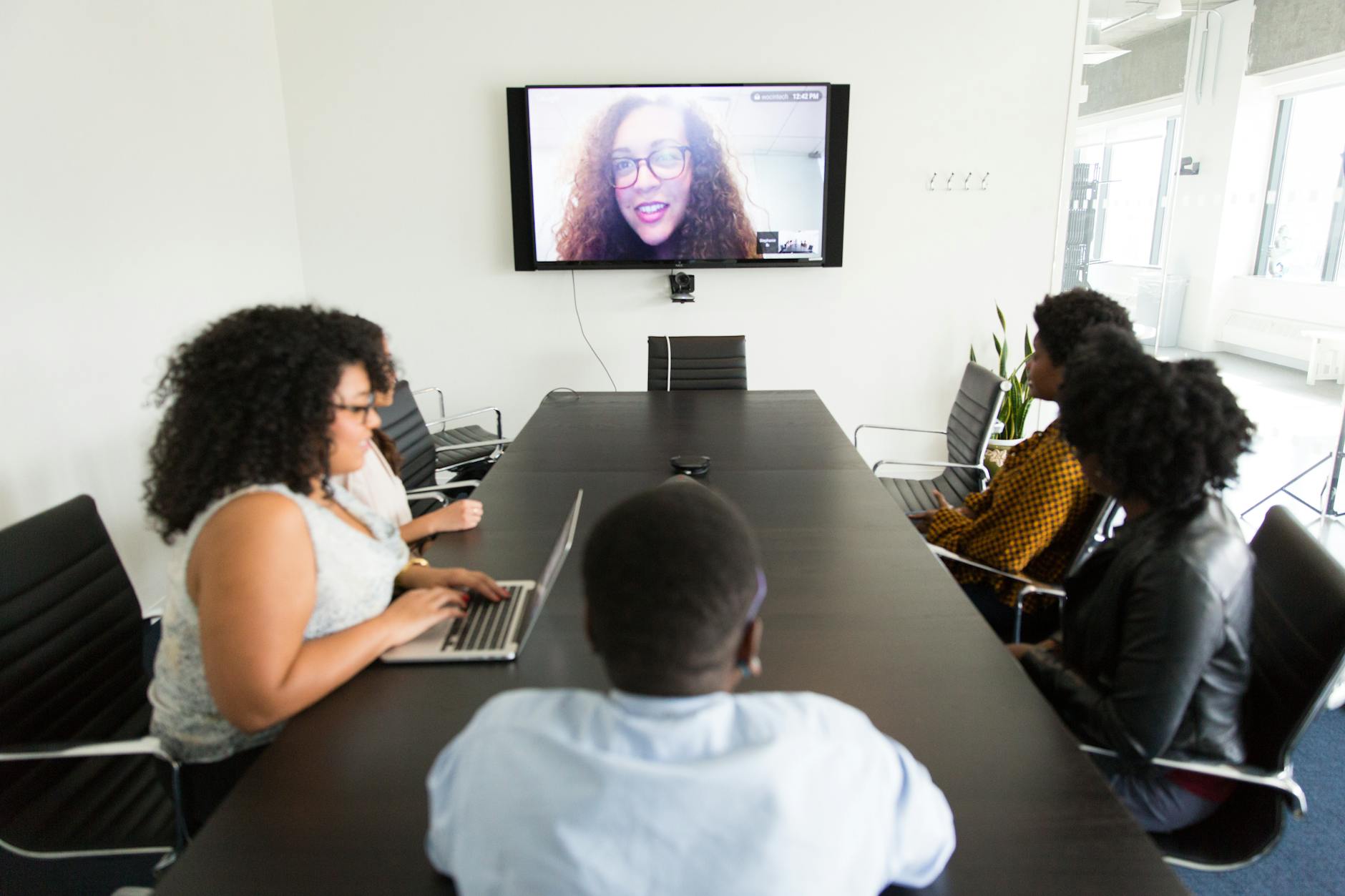
Remote and hybrid work have stopped being a temporary experiment. They are now a management style, a meeting design problem, and a trust test all at once.
That matters because the old office-default playbook does not travel well. If a manager can see people at their desks, they may feel informed. If half the team is on video and the other half is in a room, they may feel included. Neither feeling is the same as actual alignment.
The evidence keeps pointing in the same direction: flexibility is sticky, and employees have little appetite for going back to rigid office routines. Make sense? At the same time, leaders are being asked to do more with less direct oversight. The result is not chaos, exactly. It is a quiet shift in what leadership has to look like.
Why it matters now

A lot has changed since remote work was treated as an emergency fix. Microsoft’s Work Trend Index and Gallup’s workplace research both show that flexibility expectations remain high, while managers are under pressure to maintain performance, cohesion, and culture without relying on physical proximity.
There is also a broader shift in what “being present” means. Many organisations now run on a mix of office days, home days, distributed time zones, and project-based collaboration. That means the real unit of management is no longer the room. It is the working agreement.
The core idea

Leading remote and hybrid teams is not about choosing between trust and control. It is about replacing low-value supervision with higher-quality structure. When people are not co-located, the manager’s role changes from watching work happen to making work visible, repeatable, and fair. Make sense?
That sounds simple. It isn’t. Visibility is easy to fake with status meetings and long Slack threads. Fairness is harder, because proximity bias creeps in fast: the people in the room get the quick answers, the informal context, and sometimes the benefit of the doubt. Remote leadership has to compensate for that on purpose.
The best teams make a few things explicit early:
- What must be synchronous, and what does not. Not every discussion deserves a meeting. Some topics need quick decisions; others are better handled in writing.
- How work is documented. If knowledge lives only in someone’s head or in a hallway conversation, remote team members will always be behind.
- What good responsiveness looks like. “Fast” means nothing unless the team agrees on response windows for messages, reviews, and approvals.
- How decisions are made. People need to know who decides, who advises, and when the decision is final.
- What performance is measured against. Output, quality, reliability, and collaboration are much better than visible busyness.
- How inclusion works in hybrid meetings. If remote people are always an afterthought, the whole model starts to rot.
No kidding, The hardest part is resisting the urge to add process for its own sake. A remote team does not need more bureaucracy. It needs fewer assumptions. If your team keeps asking the same questions, that usually means the process is too vague, not too light.
If it matters, write it down. If it is still unclear after writing it down, make it clearer before the next meeting.
A good remote or hybrid leader also pays attention to energy, not just output. Some people do their best focused work alone. Others need a few live conversations to get moving. A practical manager notices patterns and designs around them instead of forcing one working style on everyone.
That includes being honest about which work truly benefits from being together. Brainstorming can work well in person when speed matters. Coaching conversations often go better live too. But updates, review cycles, planning, and many decision threads are usually better documented asynchronously, because they create a durable record and reduce repetition.
What this looks like in practice

A mid-size SaaS team with engineers, product managers, and support staff may meet twice a week for live decision-making, but keep project updates in writing. The manager does less chasing and more synthesising. People stop asking, “What happened in that meeting?” because the record is already there.
A 50-person agency may keep hybrid office days for client work and internal workshops, but publish simple rules for who needs to be in the room and why. The result is less resentment. Nobody feels they commute just to sit on a laptop in silence while half the team joins by video. Right?
A solo-led operations team spread across three time zones may build its rhythm around handoffs. The leader checks for overlap gaps, response-time bottlenecks, and decisions that stall overnight. The job becomes less about constant availability and more about keeping the pipeline moving.
Common mistakes to avoid

-
Confusing proximity with performance. The people who speak most in meetings are not always the ones doing the best work. In hybrid settings, the visible contributors often get rewarded first, even when others are carrying more of the real load.
-
Running hybrid meetings like office meetings with a camera. If the room dominates the conversation, remote attendees become spectators. That is not collaboration; it is a broadcast with a chat box.
-
Leaving expectations unwritten. When managers assume everyone knows the rhythm, they create uneven experiences. One person thinks a reply in two hours is late, another thinks two days is normal.
-
Overusing live meetings to create certainty. More meetings can make leaders feel safer, but they often reduce focus and push actual work into the margins. If every issue becomes a meeting, the team loses the ability to think independently.
-
Ignoring onboarding after the first week. New hires in remote and hybrid teams need more than equipment and access. They need context, examples, and repeated guidance, because they cannot absorb culture by osmosis.
-
Treating culture as perks. Snacks, swag, and occasional social events do not solve weak management. In distributed teams, culture is mostly built through consistency: how decisions are made, how conflict is handled, and whether people feel safe to ask questions.
A practical checklist

- Write a working agreement for the team. Cover core hours, response times, meeting rules, documentation standards, and decision ownership.
- Audit your recurring meetings. Keep the ones that drive decisions or unblock work. Convert the rest to written updates or shorter check-ins.
- Standardise meeting hygiene. Send agendas in advance, assign a facilitator, and decide in advance whether remote participants will be first-class participants or merely observers.
- Document decisions where everyone can find them. Use a shared space, not private messages or side conversations.
- Check for proximity bias. Ask who speaks most, who gets follow-up work, and who seems to be missing context.
- Review output, not activity. Define what quality looks like for each role, then evaluate against that instead of online status or meeting presence.
- Build onboarding as a process, not an event. Create a repeatable first 30 days with named contacts, core docs, and a clear path for questions.
- Schedule occasional in-person time with intent. Use it for relationship-building, planning, conflict resolution, or complex work that genuinely benefits from being together.
When NOT to do this
Remote and hybrid leadership is not the right answer for every team. If the work depends on immediate physical collaboration, sensitive real-time coordination, or very tight apprenticeship, forcing a distributed model can make everything slower and more fragile.
It is also a mistake to romanticise flexibility when the organisation has weak basics. If goals are unclear, accountability is inconsistent, and managers avoid hard conversations, remote work does not cause those problems - but it does expose them faster. Sometimes the fix is not better hybrid leadership. Sometimes it is simpler than that: hire better, define the job better, or stop pretending the team has a shared system when it doesn’t. Why add distance to confusion?
Where to learn more
- Microsoft Work Trend Index: https://www.microsoft.com/en-us/worklab/work-trend-index
- Gallup workplace research: https://www.gallup.com/workplace/
- Stanford Virtual Human Interaction Lab / remote work research: https://vhil.stanford.edu/
Honestly, Leading remote and hybrid teams well is mostly about clarity, consistency, and restraint. Get those three right, and distance stops being the main story. Ignore them, and even a well-paid, talented team can drift into confusion - so what would you rather fix first?