The 8:17 a.m. idea that changed a product meeting
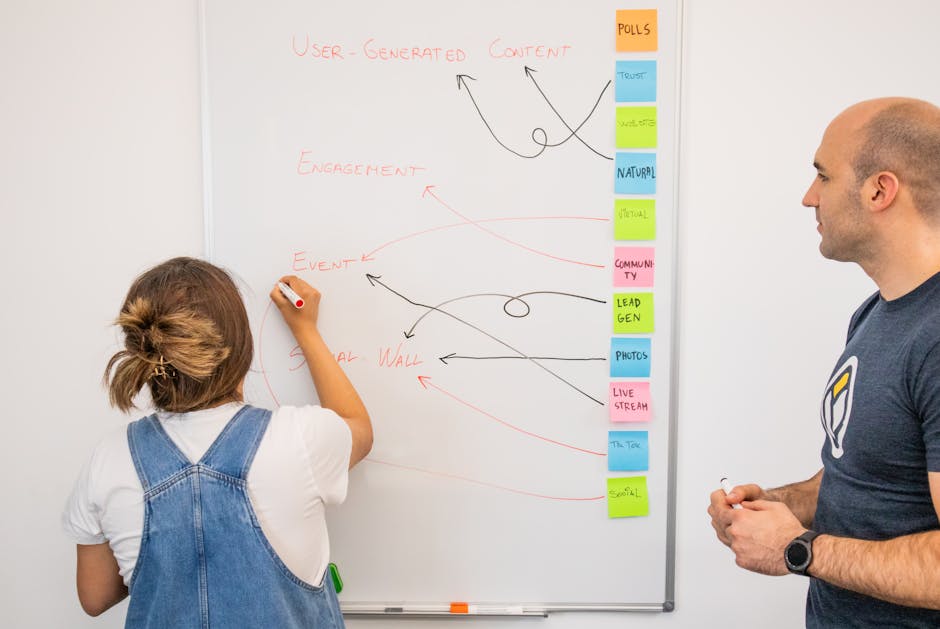
At 8:17 a.m. on a grey Tuesday in Wrocław, Amir Sato, a customer success lead, was staring at a whiteboard that looked permanently cursed. Two support issues, one stalled onboarding flow, and a team that kept saying, “We need a more creative answer.” Nothing arrived. Not even a mediocre answer.
So Amir tried a boring-sounding trick: he rewrote the problem as three smaller questions, gave each question a five-minute timer, and forced the group to produce nine ugly ideas before anyone was allowed to critique. By 8:41, the team had a retention fix that cut onboarding drop-offs by 17% over the next six weeks. Nobody in that room called themselves creative. That was almost the point.
Creativity at work is often sold like a personality trait. It isn’t. It’s a repeatable set of moves: changing the frame, adding constraints, borrowing from elsewhere, and making the first draft deliberately terrible. That matters because the people asked to solve messy problems are rarely designers, writers, or inventors. They’re HR business partners, engineers, ops leads, accountants, sales managers. The job still demands original thinking. The title just doesn’t announce it.
Why it matters now
A lot of teams are under pressure to produce better ideas with fewer meetings, fewer people, and less patience for vague brainstorming. Generative AI has raised the baseline for “a quick draft”, which means human value has shifted toward deciding what’s worth making, where the real constraints sit, and how to combine existing pieces in a way that actually works.
No kidding, At the same time, organisations are getting less forgiving about wasteful ideation. Product cycles are shorter. Hiring is tighter. Training budgets are thinner. That makes creativity less of a luxury and more of a practical survival skill. If you can’t create useful options quickly, you get stuck choosing between stale plans.
Creativity is a process, not a vibe

The easiest way to lose confidence is to treat creativity like lightning. You wait, you hope, you feel slightly guilty, and then you call the meeting a wash. Better to think in stages. First, define the problem. Then widen the field. Then recombine. Then edit. Each stage uses a different kind of thinking, and each can be practised.
Here are the techniques that work best for people who don’t see themselves as “creative”:
- Reframe the question. If the brief is too broad, the brain goes blurry. Turn “How do we improve onboarding?” into “How do we get a first success within 12 minutes?”
- Use constraints on purpose. Limits are not the enemy; they’re often the spark. Ask for ideas that fit a single channel, a single day, or a fixed budget of 47 minutes.
- Borrow, then bend. Steal the structure from another field. A recruitment team can copy the way a restaurant handles reservations; a support team can copy a video game tutorial flow.
- Force quantity before quality. Your first 10 ideas should be bad. Your first 20 may still be bad. That is fine. Good ideas often appear after the obvious ones are exhausted.
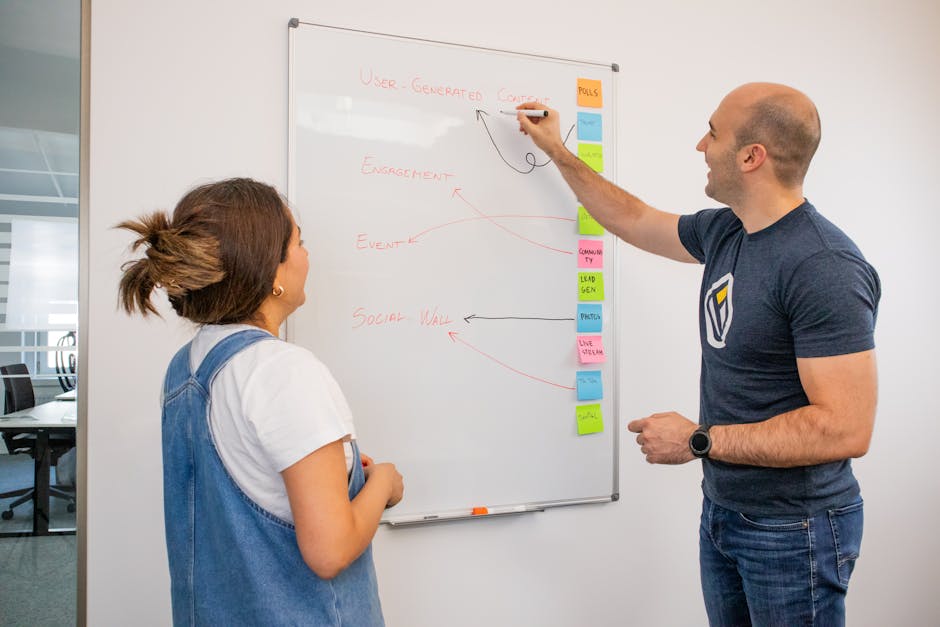
- Switch formats. Speak, sketch, rank, map, sort cards, or write sticky notes. Different formats expose different associations.
- Use “what else is true?” This question interrupts the default story. It’s simple, and annoyingly effective.
The trick is not to become an artsy person. It’s to build a small machine that reliably produces options.
good ideas rarely show up as good ideas first.
Real talk, A useful mental model is that creativity lives in combinatorics. You are not inventing from nothing; you are mixing observations, constraints, analogies, and half-formed guesses into something with new value. That’s why so many strong ideas feel obvious in hindsight. They weren’t magic. They were connections.
And yes, some people are more naturally associative. Fine. But method beats mood more often than we like to admit. Even highly imaginative teams use structure because structure stops one loud voice from dominating the room and keeps quieter, stranger ideas from being crushed too early.
What this looks like in practice
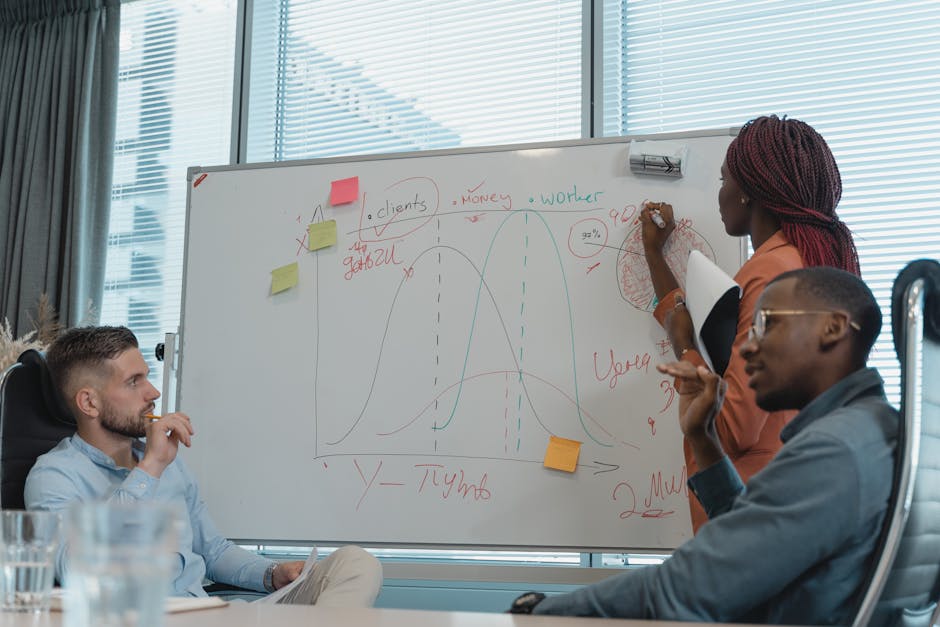
Elena Ionescu, an HR business partner in Doha, Qatar, had a hiring bottleneck: 31 interview panels were producing inconsistent feedback, and candidates were dropping out after the third stage. She replaced the usual “let’s discuss” meeting with a forced-choice exercise: every interviewer had to rank 6 identical criteria before talking. In 3 weeks, the team reduced decision time by 29% and cut duplicate interview questions nearly in half.
Jonas Khanal, an engineering manager in Kraków, Poland, was stuck on a sprint planning problem. Developers were spending too much time on small fixes that kept reappearing. Instead of asking for ideas, he asked the team to name the “worst possible process” for bug triage. The resulting complaints turned into a new checklist and saved 14 engineer-hours per week. That was the whole trick: invert the problem, then harvest the useful bits.
Nadia Ferris, a marketing ops lead in Manchester, UK, needed three campaign concepts for a niche software launch, but the team had only 55 minutes and no appetite for a whiteboard marathon. She used a “copy, combine, constrain” exercise: copy the hook style from a fintech ad, combine it with a customer case study, constrain the draft to 9 words. By the end, the team had 12 usable headline routes and one campaign angle that lifted click-through by 8.4%.
Common mistakes to avoid

-
Waiting for a mood you can trust. Many people interpret “I’m not feeling creative” as a final verdict. It isn’t. It usually means the task is underdefined, the stakes feel fuzzy, or you haven’t changed the format enough to get unstuck.
-
Brainstorming too early. If the problem isn’t framed well, the room produces noise instead of options. A ten-minute reframe can save a forty-minute discussion that was doomed from the start.
-
Critiquing the first idea in the room. That first idea is often the safest one, not the best one. If people learn they’ll be judged immediately, they stop taking useful risks and start offering polished clichés.
-
Treating constraints as punishment. Budgets, time limits, and policy rules are not just barriers; they’re design inputs. When you name the constraint clearly, you often get sharper ideas faster because the team stops wandering.
-
Copying without adaptation. Borrowing from another field is smart. Copying it wholesale is lazy. A process that works for an e-commerce team in Berlin may fail in a hospital, a government office, or a remote support setting unless you translate it carefully.
-
Overvaluing originality and ignoring usefulness. A wild idea that cannot be tested, explained, or implemented is just office theatre. The goal is not to impress the group chat. It’s to create a better next step.
A practical checklist
- Rewrite the problem in one sentence. Make it concrete, measurable, and slightly narrower than the original brief.
- Add one useful constraint. Try a time limit, a budget cap, a single audience, or a ban on common solutions.
- Generate 12 options fast. Give yourself 7 minutes and write them badly on purpose. Quantity first.
- Steal one structure from elsewhere. Look at a game tutorial, a restaurant menu, a medical form, or a museum guide. Ask what the format teaches.
- Run a “worst idea” round. It lowers pressure and often exposes what the team is trying too hard to avoid.
- Use a simple decision filter. Score ideas on feasibility, clarity, and likely impact. Don’t let the most talkative person set the standard.
- Prototype with something tiny. A sketch, a mock email, a fake schedule, a rough script. Make the idea visible before you debate it.
- Review what produced the best ideas. Was it the constraint, the analogy, the format switch, or the group mix? Repeat what works.
When NOT to do this
Not every problem needs a creative technique. Sometimes the answer is already known, and what’s missing is execution, not imagination. If a process has failed because people skipped steps. Ignored policy, or refused to use the tools already in place, a creativity workshop is just expensive fog.
There’s also a danger in using creativity language to avoid hard decisions. Sound familiar? “Let’s ideate more” can become a polite way to postpone accountability. If the team needs one clean decision, give them one. If they need alignment, don’t disguise that as innovation work. Creativity should help action, not replace it.
Where to learn more
- https://en.wikipedia.org/wiki/Creativity
- https://www.mindtools.com/ and search for brainstorming, SCAMPER, and lateral thinking resources
- https://www.nngroup.com/ and search for ideation and design thinking articles
If you’re not naturally inventive, that’s not a flaw to hide. It just means you’ll do better with a method than with a mood. The most useful creative people at work are often the ones who stop romanticising the process and start repeating the parts that produce real options-so what’s the first problem you’re ready to reframe?